Sign In










 Facebook
 X-Twitter
 Instagram
 Linkedin
 Youtube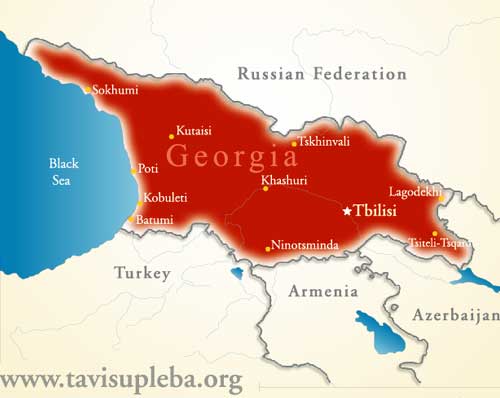

Significance
Immigration from Georgia has generally reflected the legacy of the Soviet Union, political transition, armed conflict, economic restructuring, educational opportunities, professional employment, family reunification, and international business connections.
Migration from Georgia has historically been shaped by political and economic changes in the Caucasus region. Following the dissolution of the Soviet Union in 1991, many Georgians sought opportunities abroad because of economic instability, unemployment, and regional conflicts. Most migration initially occurred to Russia, Ukraine, and other former Soviet republics, while increasing numbers later moved to the European Union and the United States for higher education, skilled employment, entrepreneurship, family sponsorship, and asylum. In recent decades, economic development, international business, academic exchange, and professional mobility have continued to influence migration to the United States, where Georgian immigrants have established growing communities while maintaining strong cultural, linguistic, and family ties with their homeland.
Georgian Migration Before Independence
Before independence, Georgia was one of the republics of the Soviet Union, and migration was largely regulated by Soviet authorities. Earlier, under the Russian Empire and later the Soviet system, movement was influenced by industrialization, military service, higher education, government assignments, scientific research, and agricultural development. Georgians frequently relocated within the Soviet Union as students, engineers, teachers, healthcare workers, military personnel, scientists, and government employees. Direct migration to the United States remained relatively uncommon because international travel was tightly controlled and political, educational, and economic connections were primarily within the Soviet bloc. Georgia declared independence from the Soviet Union on April 9, 1991, and the United States recognized the country later that year before establishing diplomatic relations.
Late-Twentieth- and Early-Twenty-First-Century Immigration
Migration increased significantly after independence as economic hardship, political instability, unemployment, and armed conflicts in Abkhazia and South Ossetia encouraged many Georgians to seek opportunities abroad. Students, healthcare professionals, engineers, academics, entrepreneurs, information technology specialists, and businesspeople travelled to the United States and other countries for university education, professional employment, investment, research, or family reunification. More recently, international education, technology, business development, and cultural exchange have continued to support migration, while family sponsorship has also contributed to the growth of Georgian communities overseas. In the United States, Georgian immigrants often rely on family networks, churches, cultural organizations, and professional associations for support with housing, employment, education, and social integration while preserving the Georgian language, traditional cuisine, music, religious practices, and strong connections with relatives in Georgia.