 Sign In








 Facebook
 X-Twitter
 Instagram
 Linkedin
 Youtube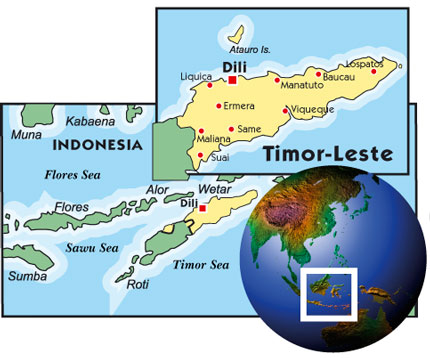
More Information
More Information
Street Soccer in Timor-Leste
Street soccer is a popular recreational activity in Timor-Leste, where children and teenagers regularly gather in neighbourhood streets, village areas, school playgrounds, community fields, and open spaces to play informal football matches. These games provide young players with an enjoyable way to stay active, improve their football skills, and build friendships through the sport.
The energetic nature of street soccer encourages close ball control, quick passing, creative dribbling, and continuous movement. Playing on different surfaces and in smaller spaces helps participants improve their technical ability, confidence, teamwork, and decision-making while adapting to local playing conditions.
Street soccer offers an affordable and accessible way for communities across Timor-Leste to enjoy football without requiring professional facilities. It promotes healthy lifestyles, strengthens community relationships, and inspires many young people to continue their football journey through schools, local clubs, academies, and community competitions.
Street Soccer Culture in Timor-Leste
Football is one of the most popular sports in Timor-Leste, and street soccer is often where many children first develop their passion for the game. Informal matches organised by schools, friends, and neighbourhood communities create a welcoming atmosphere where players of different ages and abilities can participate while sharing their love for football.
Skills Developed Through Street Soccer
Street soccer helps players improve dribbling, first touch, passing accuracy, shooting technique, agility, balance, ball control, and tactical awareness. Regular games also strengthen communication, creativity, confidence, resilience, and the ability to make quick decisions during fast-paced situations.
Street Soccer and Community Development
Street soccer brings communities together through football while encouraging teamwork, positive youth participation, and active lifestyles. It also provides aspiring players with valuable experience before progressing to school teams, local football clubs, academies, or organised youth football programmes.
The TIMOR-L. in the DMV Metro

Timor-Leste (Timorese) diaspora in the DMV: The community is small and dispersed, and there is no reliable current published estimate for the total Timorese population across Washington, DC, Maryland, and Virginia. Washington, DC has the strongest institutional connection because the Embassy of Timor-Leste is located there. The diaspora likely includes Timorese-born residents, Timorese-Americans, students, diplomats, international-development professionals, and people connected to Timor-Leste through universities and NGOs.
In Washington, DC, the Timorese population is likely very small and primarily connected to diplomatic and international institutions. In Maryland, potential concentrations would most plausibly be in Montgomery County and Prince George’s County, although there is no reliable evidence of a significant Timorese enclave. In Virginia, potential residents are most likely to be dispersed across Fairfax County, Arlington County, Loudoun County, Alexandria, and Prince William County, reflecting the broader pattern of immigrant and international-professional populations in Northern Virginia.
For population data, the best sources are the U.S. Census Bureau American Community Survey, Census PUMS, and foreign-born data. For organizations and institutional connections, the main source is the Embassy of Timor-Leste in Washington, DC, supplemented by Timor-Leste government, university, and international-development networks. Because the Timorese population is very small, ACS estimates may have large margins of error or may not provide a separately usable estimate. Therefore, the appropriate dataset designation is “NR — not reliably reported” rather than assigning an unsupported population number.
Significance
Timorese migration has generally reflected colonial rule, armed conflict, forced displacement, family relationships, education, overseas employment, and the search for political and economic security.
Timorese migration developed from long-established traditions of travel, trade, marriage, and family connections between Timor and neighbouring Southeast Asian islands. Movement increased during Portuguese colonial rule as people travelled for religious education, government service, military work, and employment. Political conflict after 1975 caused large-scale displacement within the territory and migration to Indonesia, Portugal, Australia, and other countries. Further displacement occurred during the violence surrounding the 1999 independence referendum. After Timor-Leste achieved independence in 2002, limited employment opportunities, education, professional training, and temporary overseas work continued to encourage migration. Timorese communities abroad maintained close relationships with their homeland through financial assistance, family support, cultural organisations, religious activities, and the preservation of Tetum, Portuguese, and traditional customs.
Timorese Migration Before Portuguese Colonial Rule
Movement across the island of Timor existed centuries before European contact, as local communities travelled for fishing, agriculture, trade, marriage, political alliances, and family responsibilities. Timor was connected to regional trading networks through sandalwood, beeswax, spices, and other valuable products. Merchants from neighbouring islands and parts of Asia regularly visited the region. Portuguese traders and missionaries began arriving during the sixteenth century and gradually established control over the eastern part of Timor. The island was later divided between Portuguese Timor in the east and Dutch-controlled territory in the west. Despite the colonial border, communities continued to maintain family, cultural, and commercial relationships across the island.
Twentieth-Century Migration
Timorese migration increased during the twentieth century as colonial policies, war, political instability, and economic hardship affected the population. Portugal governed East Timor until 1975, when independence was declared following the collapse of Portuguese colonial rule. Indonesian forces entered the territory later that year, beginning a period of conflict that displaced many people. Some Timorese moved to Portugal, Australia, Indonesia, and other countries, while many were displaced within East Timor. Violence surrounding the 1999 United Nations-supported referendum caused hundreds of thousands of residents to leave their homes or cross into West Timor. After independence in 2002, education, family reunification, temporary labour programmes, and limited domestic employment continued to encourage migration. Timorese churches, cultural associations, and extended-family networks helped migrants preserve their language, religious traditions, cultural identity, and close relationships with relatives living in Timor-Leste.

Latest Fixtures & Results
| 04.03.2028 |  |
Timor-L. | - |  |
Austria |
| 04.10.2028 | |
Timor-L. | - |  |
Yemen |
| 04.18.2028 |  |
Andorra | - | |
Timor-L. |
| 04.25.2028 | |
Timor-L. | - |  |
Uruguay |
| 05.02.2028 |  |
Kuwait | - | |
Timor-L. |
| 05.09.2028 | |
Timor-L. | - |  |
Uzbekistan |
| 05.16.2028 |  |
Kyrgyzstan | - | |
Timor-L. |
| 05.23.2028 |  |
Vietnam | - | |
Timor-L. |
| 05.30.2028 | |
Timor-L. | - |  |
Turkmenistan |
