Sign In











 Facebook
 X-Twitter
 Instagram
 Linkedin
 Youtube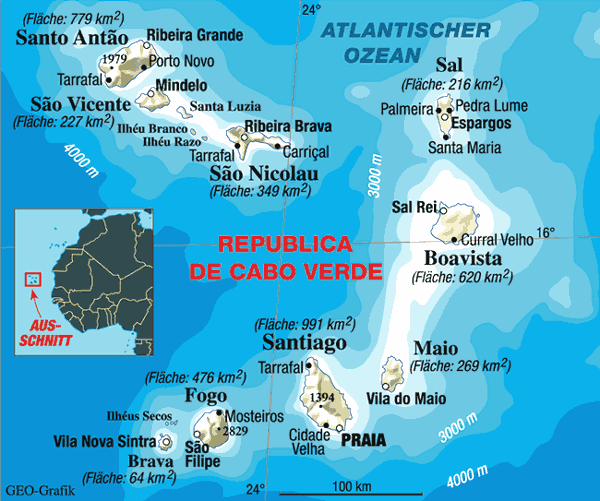

Significance
Cape Verdean immigration to the United States has generally reflected Portuguese colonial rule, recurring drought and famine, maritime employment, limited economic opportunities, family networks, education, professional work, and family reunification.
Cape Verdean migration to the United States has a long history closely connected with New England’s maritime industries. Beginning during the nineteenth century, American whaling vessels recruited sailors from the islands, especially Brava and Fogo. Some crew members later settled in Massachusetts and Rhode Island and helped relatives migrate through established family and shipping networks. Drought, famine, poverty, limited farmland, and compulsory military service encouraged further emigration from the Portuguese-controlled islands. Communities developed most visibly in New Bedford, Boston, Brockton, Providence, and nearby coastal areas. Cape Verdean immigrants worked in whaling, shipping, cranberry farming, textile manufacturing, construction, domestic service, and other industries while preserving Kriolu language, music, food, religious traditions, and strong connections with their home islands.
Cape Verdean Migration Before Independence
Before independence, Cape Verde was governed by Portugal and experienced recurring droughts, food shortages, unemployment, and limited natural resources. New England whaling companies began recruiting Cape Verdean men during the nineteenth century, providing one of the earliest regular migration routes from sub-Saharan Africa to the United States. Sailors frequently joined ships visiting the islands and later settled around New Bedford, Massachusetts, and Providence, Rhode Island. Over time, women and children also migrated through family reunification, transforming temporary maritime settlements into permanent communities. Some immigrants found employment in cranberry bogs, factories, docks, domestic service, construction, and local businesses. Because they travelled using Portuguese documents, many early Cape Verdeans were officially recorded as Portuguese rather than as a separate national group, making their precise immigration numbers difficult to determine.
Late-Twentieth-Century Immigration
Cape Verde gained independence from Portugal on July 5, 1975, and the United States recognised the new republic that same day. Immigration continued through family sponsorship, employment, education, and established community networks. The Immigration and Nationality Act of 1965 had already removed restrictive national-origin quotas and made family reunification an increasingly important pathway. Later arrivals included students, healthcare workers, educators, business owners, skilled employees, and relatives joining communities in Massachusetts, Rhode Island, Connecticut, and other states. Cape Verdean organisations, churches, businesses, newspapers, music groups, and cultural festivals helped newcomers adapt while preserving Kriolu, Portuguese, morna music, traditional food, and island identities. The historic schooner Ernestina, which transported cargo and passengers between Cape Verde and the United States from 1948 to 1965, remains an important symbol of these transatlantic connections.