Sign In












 Facebook
 X-Twitter
 Instagram
 Linkedin
 Youtube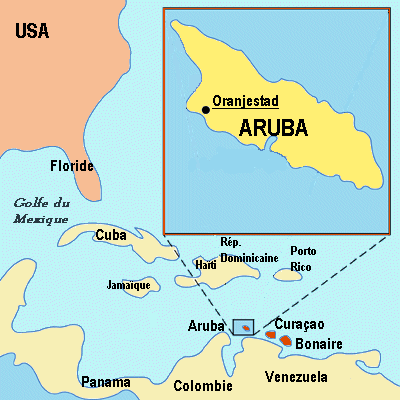

Significance
Aruban migration has generally reflected colonial rule, trade, employment opportunities, oil production, tourism, political change, education, and close connections with the Netherlands and neighbouring Caribbean and South American countries.
Migration to and from Aruba developed through centuries of movement between the island, Venezuela, Colombia, Curaçao, and other parts of the Caribbean. During the colonial period, Indigenous communities, European settlers, enslaved Africans, merchants, sailors, and labourers contributed to the island’s population. Migration increased during the twentieth century when the development of the oil industry attracted workers from neighbouring islands, South America, Europe, and other regions. After the refinery’s importance declined, tourism, construction, hospitality, retail, and financial services became major sources of employment and attracted additional foreign workers. Arubans also moved to the Netherlands and the United States for education, professional opportunities, healthcare, and family reunification. Today, Aruba is a highly diverse society whose residents represent more than one hundred nationalities.
Aruban Migration Before Modern Economic Development
Migration in Aruba began long before European colonisation, when Indigenous peoples travelled by canoe from the northern coast of South America and established communities on the island. Spanish explorers arrived during the early sixteenth century, and Aruba later came under Dutch control in 1636. Its location near Venezuela encouraged regional fishing, trade, family relationships, and movement between neighbouring islands and the South American mainland. During Dutch colonial rule, Aruba’s population included Indigenous descendants, Europeans, Africans, merchants, sailors, religious workers, and labourers. Unlike several other Caribbean islands, Aruba did not develop a large plantation economy because its dry climate and limited rainfall restricted agriculture. Residents instead depended on livestock farming, fishing, salt collection, aloe cultivation, gold mining, and regional commerce. Limited employment encouraged some Arubans to travel temporarily or permanently to Curaçao, Venezuela, and other nearby territories while maintaining cultural and family connections with their home island.
Twentieth-Century Migration
Aruba experienced major migration and economic change during the twentieth century. The establishment of a large oil refinery in the 1920s created thousands of jobs and attracted workers from British Caribbean islands, the Netherlands, Venezuela, Suriname, and other countries. New communities contributed languages, religions, food, music, and cultural traditions to Aruban society. When oil employment later declined, tourism became increasingly important, especially after organised tourism promotion began in 1947 and the island’s first major resort opened in 1959. Hotels, restaurants, shops, construction projects, transportation, and public services attracted new workers from Colombia, Venezuela, Peru, the Dominican Republic, Haiti, the Netherlands, and other regions. Aruba obtained separate status within the Kingdom of the Netherlands in 1986, strengthening its ability to manage local affairs. Migration remains central to the island’s population, workforce, and multicultural identity, while many Arubans continue moving abroad for education and employment.