Sign In










 Facebook
 X-Twitter
 Instagram
 Linkedin
 Youtube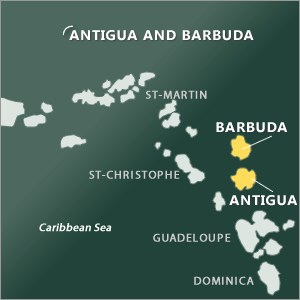

Significance
Antiguan and Barbudan migration has generally reflected colonial rule, limited employment opportunities, family connections, economic change, natural disasters, education, and the search for work abroad.
Migration from Antigua and Barbuda developed through movement between Caribbean islands for trade, employment, marriage, education, and family responsibilities. During the colonial period, the islands’ plantation economy depended heavily on the forced migration of enslaved Africans. After slavery ended, limited land, declining sugar production, low wages, and restricted employment encouraged residents to seek opportunities in Britain, the United States, Canada, the U.S. Virgin Islands, and other Caribbean territories. Migration continued after independence in 1981 through family reunification, education, professional employment, and regional mobility. At the same time, the expansion of tourism, construction, hospitality, and services attracted foreign workers to Antigua and Barbuda, transforming the country into both a source and destination of migration.
Antiguan and Barbudan Migration Before Independence
Before independence, migration was shaped by British colonial rule and the development of sugar plantations on Antigua. English settlement began during the seventeenth century, and large numbers of enslaved Africans were forcibly transported to the islands to work in the sugar industry. After slavery was abolished in 1834, many workers remained economically dependent on plantations and had limited access to land or secure employment. Barbuda developed differently, with a smaller population and an economy based on agriculture, livestock, fishing, and regional trade. During the nineteenth and early twentieth centuries, residents increasingly travelled to neighbouring Caribbean islands, Britain, and North America for seasonal work, military service, education, and better wages. Overseas migration became an important way for families to obtain financial support while maintaining close cultural and family connections with the islands.
Late-Twentieth-Century Migration
Antiguan and Barbudan migration continued during the late twentieth century as the sugar industry declined and the national economy shifted toward tourism, construction, transportation, and financial services. Many residents moved abroad for university education, healthcare, professional training, employment, and family reunification, creating communities in the United Kingdom, the United States, Canada, and other Caribbean territories. Antigua and Barbuda gained independence from Britain on November 1, 1981, but migration remained an important part of family and economic life. Migrants supported relatives through remittances, return visits, property investment, and community organisations. Expanding hotels, restaurants, construction projects, and public services also created demand for workers from other Caribbean countries and overseas. As a result, Antigua and Barbuda became both an emigrant society with a substantial diaspora and a destination for regional and international migrants.