Sign In









 Facebook
 X-Twitter
 Instagram
 Linkedin
 Youtube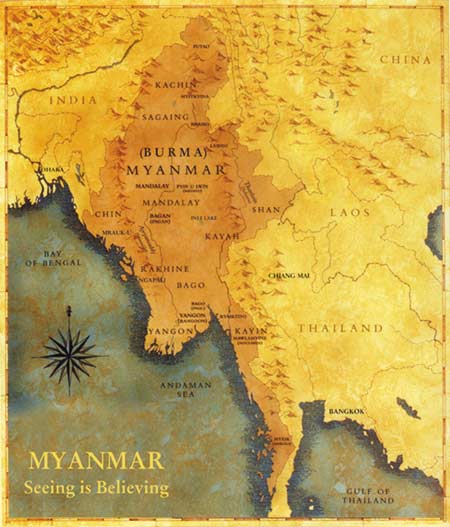

Significance
Burmese immigration to the United States has generally reflected British colonial rule, political repression, military government, ethnic conflict, refugee displacement, education, professional employment, and family reunification.
Burmese migration to the United States remained relatively limited until the late twentieth century. Early arrivals from Burma—officially known as Myanmar—mainly included students, diplomats, merchants, sailors, academics, and professionals seeking education or specialised work. Migration increased after decades of military rule, economic hardship, political persecution, and armed conflict between the central government and ethnic minority groups. Karen, Karenni, Chin, Kachin, Shan, Rohingya, and other communities fled to Thailand, Malaysia, Bangladesh, and India before some were admitted to the United States as refugees. Large-scale American resettlement from camps along the Thailand–Burma border began during the 2000s, helping establish Burmese communities in Indiana, California, New York, Minnesota, Texas, and other states.
Burmese Migration Before Military Rule
Before military rule, migration was shaped by British colonisation, regional commerce, World War II, independence, and early ethnic conflicts. Britain gradually took control of Burma during the nineteenth century and administered it as part of British India before making it a separate colony in 1937. Residents travelled within the British Empire as soldiers, sailors, civil servants, traders, students, and labourers, but direct settlement in the United States remained uncommon. Burma experienced extensive destruction during World War II and became independent from Britain on January 4, 1948. The United States had already established diplomatic relations with Burma in 1947. Political instability and armed rebellions followed independence, causing some officials, students, professionals, and members of ethnic communities to seek safety or opportunities abroad.
Late-Twentieth- and Early-Twenty-First-Century Immigration
Burmese immigration increased after the military seized power in 1962 and imposed authoritarian rule, economic restrictions, censorship, and political repression. The suppression of nationwide demonstrations in 1988 and continuing military campaigns against ethnic minorities forced many people into exile or refugee camps in neighbouring countries. Beginning in 2005, the United States supported a major group-resettlement programme for refugees living along the Thai border; by 2014, more than 70,000 Myanmar refugees from those camps had been resettled in the United States. New arrivals often needed assistance with English, employment, housing, healthcare, and education. Churches, Buddhist monasteries, mosques, community associations, and refugee organisations helped families rebuild their lives while preserving Burmese and ethnic languages, food, music, religious practices, festivals, and connections with relatives abroad