Sign In








 Facebook
 X-Twitter
 Instagram
 Linkedin
 Youtube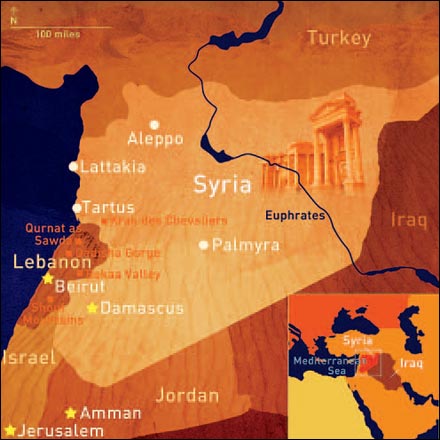
More Information
More Information
Street Soccer in Syria
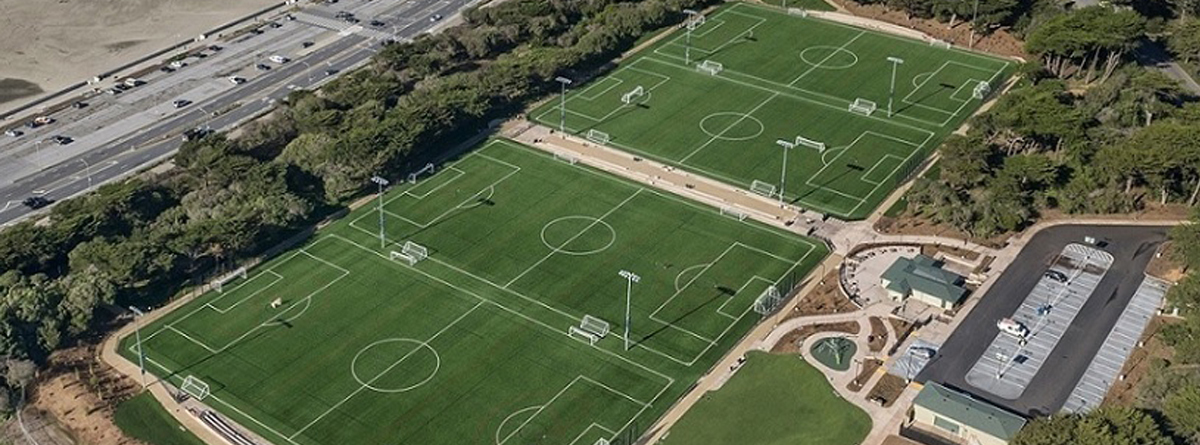
Street soccer is a widely enjoyed activity in Syria, where children and teenagers regularly play informal football matches in neighbourhood streets, school playgrounds, village areas, community spaces, and open fields. These games provide young players with an accessible way to enjoy football, stay physically active, and develop their skills while spending time with friends.
The fast-paced nature of street soccer encourages close ball control, quick passing, creative dribbling, and intelligent movement. Playing in smaller spaces and on different surfaces helps participants improve their technical ability, confidence, teamwork, and decision-making while adapting to a variety of playing conditions.
Street soccer remains an affordable and accessible way for communities across Syria to enjoy football without requiring professional facilities. It promotes healthy lifestyles, strengthens community bonds, and inspires many young people to continue their passion for the sport through schools, local clubs, and organised football programmes.
Street Soccer Culture in Syria
Football is one of the most popular sports in Syria, and street soccer is often where many children first develop their love for the game. Informal matches organised by friends, schools, and neighbourhood communities create a welcoming environment where players of different ages and abilities can participate while enjoying the spirit of football.
Skills Developed Through Street Soccer
Street soccer helps players improve dribbling, first touch, passing accuracy, shooting technique, agility, balance, ball control, and tactical awareness. Regular games also strengthen communication, creativity, confidence, resilience, and the ability to make quick decisions in fast-paced situations.
Street Soccer and Community Development
Street soccer brings communities together through football while encouraging teamwork, positive youth participation, and active lifestyles. It also provides aspiring players with valuable experience before progressing to school teams, local football clubs, academies, or organised youth football programmes.
The Syria in the DMV Metro

Syria, officially the Syrian Arab Republic, is a country in Western Asia, bordering Lebanon and the Mediterranean Sea to the West, Turkey to the north, Iraq to the east, Jordan to the south, and Israel to the southwest. The name Syria formerly comprised the entire region of the Levant, while the modern state encompasses the site of several ancient kingdoms and empires, including the Eblan civilization of the third millennium BC. In the Islamic era, its capital city, Damascus, the oldest continuously inhabited city in the world, was the seat of the Umayyad Caliphate and a provincial capital of the Mamluk Sultanate of Egypt.
The modern Syrian state was established as a French mandate and attained independence in April 1946, as a parliamentary republic. The post-independence period was tumultuous, and a large number of military coups and coup attempts shook the country in the period 1949 1970. Syria was under Emergency Law from 1962 2011, effectively suspending most constitutional protections for citizens and its system of government is considered non-democratic. Bashar al-Assad is the current president, and was preceded by his father Hafez al-Assad, who was in office since 1971. Syria is currently facing massive protests as part of the Arab Spring.
Politics in the Syrian Arab Republic takes place in the framework of what is officially a parliamentary republic, but what is considered an authoritarian government[1] where the power is in the hands of the President of Syria, his family, the ruling Ba'ath Party, and the Alawi sect. The two presidents who have been in power since 1963 � the late Hafiz al-Asad followed by his son Bashar al-Asad � were approved in plebiscites where there were no other candidates. The President and his senior aides, particularly those in the military and security services, ultimately make most basic decisions in political and economic life, with a limited degree of public accountability. The president issues laws, amends the constitution by decree; appoints ministers, civil servants and military personnel subject to the law; declares war and states of emergency.
Arabic is the official language and Syrian Arabic is most widely spoken. Kurdish is widely spoken in the Kurdish regions of Syria. Many educated Syrians also speak English and French. Armenian and Turkish are spoken among the Armenian and Turkmen minorities. Before the advent of Arabic, Aramaic was the lingua franca of the region and is still spoken among Arameans and Assyrians. Syriac is used as the liturgical language of various Syriac denominations. Most remarkably, Western Neo-Aramaic is still spoken in the village of Ma`loula, and two neighboring villages, 35 miles northeast of Damascus.
The Syrian cuisine is rich and varied in its ingredients and is linked to the region of Syria where a specific dish has originated. Syrian food mostly consists of Southern Mediterranean, Greek, and Southwest Asian dishes. Some Syrian dishes also evolved from Turkish and French cooking. Dishes like shish kebab, stuffed zucchini, yabra'. The main dishes that form Syrian cuisine are kibbeh, hummus, tabbouleh, fattoush, labneh, shawarma, mujaddara, shanklish, past�rma, sujuk and ba'lawa. Ba'lawa is made of filo pastry filled with chopped nuts and soaked in honey. Syrians often serve selections of appetizers, known as meze, before the main course. za'atar, minced beef, and cheese manakish are popular hors d'�uvres. The Arabic flatbread khubz is always eaten together with meze.
Syria's capital, Damascus, has long been one of the Arab world's centers for cultural and artistic innovation, especially in the field of classical Arab music. Syria has also produced several pan-Arab stars, including Asmahan, Farid al-Atrash and singer Lena Chamamyan. The city of Aleppo is known for its muwashshah, a form of Andalous sung poetry popularized by Sabri Moudallal, as well as popular stars like Sabah Fakhri.
Significance
Syrian migration has generally reflected regional trade, family relationships, education, employment opportunities, religious and ethnic tensions, political instability, armed conflict, and the search for safety and economic security in neighbouring countries, Europe, and North America.
Syrian migration developed from long-established Middle Eastern traditions of travel, trade, agriculture, marriage, pilgrimage, and family connections between communities across the eastern Mediterranean. Damascus and Aleppo were important commercial centres linking the Mediterranean coast with Mesopotamia, Anatolia, Arabia, and Persia. Migration increased during the late nineteenth and early twentieth centuries as economic pressures, military service, political change, and religious tensions encouraged Syrians to settle elsewhere. Communities gradually developed in Egypt, Europe, North America, and South America. After 2011, armed conflict caused extensive internal displacement and large-scale migration to Türkiye, Lebanon, Jordan, Iraq, Europe, and other destinations. Syrian migrants continued to maintain relationships with their homeland through family support, cultural organisations, religious institutions, financial assistance, and the preservation of Arabic, traditional foods, music, and community customs.
Syrian Migration Before French Rule
Migration across the Syrian region existed centuries before European colonial administration, as merchants, farmers, pastoralists, craftspeople, scholars, and religious travellers moved in search of trade, land, water, education, security, and new settlements. Syria’s position between Asia, Africa, and Europe made it an important meeting place for numerous peoples and empires. Damascus and Aleppo attracted Arab, Armenian, Kurdish, Turkish, Jewish, Greek, and other communities. The region became part of the Ottoman Empire during the early sixteenth century and remained under Ottoman authority until World War I. During the nineteenth century, improved transportation and expanding international commerce encouraged greater movement through Syrian ports and cities. Economic hardship, local conflicts, and compulsory military service also encouraged some residents to migrate to Egypt, the Americas, and other parts of the Ottoman Empire.
Twentieth- and Twenty-First-Century Migration
Syrian migration increased during the twentieth century as colonial rule, independence, urbanisation, education, and international employment opportunities changed the population’s movement. After the Ottoman Empire collapsed, Syria came under a French mandate approved by the League of Nations in 1922. Syria gained full independence in 1946, but later political instability and economic difficulties encouraged some citizens to seek education and employment abroad. Syrians established communities in neighbouring Arab countries, Europe, the United States, Canada, Brazil, Argentina, and Australia. Beginning in 2011, protests developed into a prolonged armed conflict that displaced millions of people within Syria and across international borders. Syrian families, businesses, cultural associations, mosques, churches, and extended-family networks helped displaced people find housing, employment, education, and community support while preserving their language, religious traditions, cultural identity, and close relationships with relatives living in Syria.