Sign In











 Facebook
 X-Twitter
 Instagram
 Linkedin
 Youtube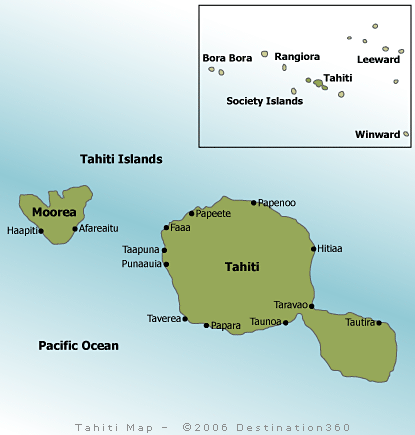

Significance
Tahitian migration has generally reflected Polynesian navigation, French colonial rule, family relationships, education, military service, employment opportunities, and Tahiti’s political association with France.
Tahitian migration developed from long-established Polynesian traditions of ocean travel, trade, marriage, settlement, and family connections between Pacific islands. Movement connected Tahiti with the other Society Islands, the Tuamotu Islands, the Marquesas, and neighbouring Polynesian societies centuries before European arrival. Contact with European explorers, missionaries, merchants, and naval powers increased during the eighteenth and nineteenth centuries. France established political control over Tahiti during the nineteenth century, and the island later became the administrative and economic centre of French Polynesia. During the twentieth century, residents moved between Tahiti, the outer islands, metropolitan France, and other destinations for education, military service, professional work, healthcare, and family reunification. Migrants continued to preserve close connections through family support, cultural associations, church activities, financial assistance, and the Tahitian language.
Tahitian Migration Before French Rule
Migration across eastern Polynesia existed centuries before European contact, as skilled navigators travelled in large canoes for fishing, trade, exploration, marriage, religious ceremonies, political alliances, and family responsibilities. Tahiti developed connections with Raiatea, Moorea, Huahine, the Tuamotu Islands, and other island groups. European ships began visiting more frequently during the eighteenth century, followed by missionaries, traders, and whalers. These contacts introduced new religions, goods, diseases, and commercial relationships. The Pomare dynasty gradually united much of Tahiti and established the Kingdom of Tahiti. Growing competition between European powers led France to establish control during the nineteenth century. In 1880, King Pomare V transferred sovereignty over Tahiti and its dependencies to France, formally ending the independent kingdom.
Twentieth-Century Migration
Tahitian migration increased during the twentieth century as transportation, French administration, education, military service, and wage employment expanded. Papeete grew as the principal port, capital, and commercial centre of French Polynesia, attracting residents from the outer islands for government work, schooling, healthcare, construction, and service-sector employment. World War II strengthened Tahiti’s strategic and transportation connections with other Pacific territories. From the 1960s, major French military and nuclear-testing activities brought investment, infrastructure, and employment, encouraging further movement towards Tahiti’s urban area. Other Tahitians travelled to metropolitan France and neighbouring Pacific territories for higher education, military careers, specialised employment, and family reunification. Tahitian churches, cultural organisations, and extended-family networks helped migrants preserve their language, dance, music, religious traditions, community responsibilities, and close relationships with relatives living in Tahiti.