Sign In





 Facebook
 X-Twitter
 Instagram
 Linkedin
 Youtube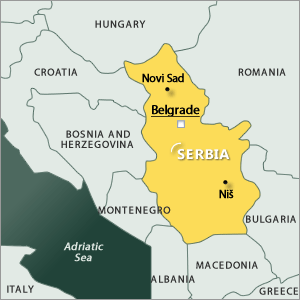
More Information
More Information
Street Soccer in Serbia
Street soccer is a well-loved recreational activity in Serbia, where children and teenagers regularly play informal football matches in neighbourhood courtyards, school playgrounds, local parks, public courts, and community sports areas. These games provide young players with an enjoyable way to stay active, improve their football skills, and spend time with friends in a competitive yet friendly environment.
The dynamic nature of street soccer encourages close ball control, quick passing, creative dribbling, and intelligent movement. Playing in smaller spaces challenges participants to think quickly, improve their technical abilities, and build confidence while adapting to different playing surfaces and match situations.
Street soccer remains an accessible and affordable way for communities across Serbia to enjoy football without requiring professional facilities. It promotes healthy lifestyles, strengthens neighbourhood connections, and inspires many young players to continue their football journey through schools, clubs, academies, and local competitions.
Street Soccer Culture in Serbia
Football has a strong tradition in Serbia, and street soccer is often where many children first develop their love for the game. Informal matches organised by schools, friends, and local communities create a welcoming atmosphere where players of different ages and skill levels can participate while sharing their passion for football.
Skills Developed Through Street Soccer
Street soccer helps players improve dribbling, first touch, passing accuracy, shooting technique, agility, balance, ball control, and tactical awareness. Regular matches also strengthen communication, creativity, confidence, and the ability to make quick decisions in fast-paced playing environments.
Street Soccer and Community Development
Street soccer plays an important role in bringing Serbian communities together through football. It encourages teamwork, positive youth participation, and active lifestyles while providing aspiring players with valuable experience before progressing to school teams, local football clubs, academies, futsal programmes, or organised youth football competitions.
The SERBIA in the DMV Metro

- St. Luke Serbian Orthodox Church: Located in Potomac, MD, St. Luke functions as the absolute social tissue and geographic anchor for the diaspora. Far more than a sanctuary, its expansive grounds serve as a full-scale civic town center hosting ethnic folklore rehearsals, youth language camps, and senior community assistance programing.
- The Famous SerbFest DC: The church grounds play host to the highly anticipated SerbFest DC, a massive cultural festival pulling thousands of DMV residents. The multi-day open-air bazaar highlights everything from live Kolo folk dances by ensembles like Opančići to booths selling imported goods, spit-roasted meats (svinjetina), and traditional pastries (krofne).
- Community Cinema Nights: Demonstrating its role as an informal cultural plaza, the church backyard frequently coordinates events like the Movies Under the Stars series alongside local youth groups, screening regional independent cinema for local families.
- The Embassy of Serbia: Housed in a historic Jules Henri de Sibour-designed mansion on Kalorama Road NW, the Embassy of the Republic of Serbia in Washington, D.C. serves as the administrative core. Following a comprehensive structural overhaul, the embassy hosts prominent community events, such as the Annual Vidovdan Receptions, which feature diplomatic town halls and student networking banquets.
- The Orfelin Circle: Operating for over two decades out of Washington, D.C., is a premier non-profit dedicated to intellectual and artistic exchange. The organization hosts literary lectures, academic roundtables, and classical recitals, bringing prominent Balkan figures directly to the District.
- The Serbian Film Festival DC: Coordinated by grassroots cultural organizations like the Moba Serbian Community Platform, the annual screens bold contemporary dramas and political thrillers across landmark independent theaters like the Miracle Theatre and AMC Georgetown, frequently hosting visiting directors from Belgrade.
Significance
Serbian immigration to the United States has generally reflected rural poverty, limited farmland, industrial employment, political conflict, war, communist rule, refugee displacement, education, professional opportunities, and family reunification.
Serbian migration to the United States became significant during the late nineteenth and early twentieth centuries. Early arrivals included farmers, miners, factory workers, railway labourers, merchants, artisans, students, and Serbian Orthodox clergy seeking employment or greater economic security. Communities developed in Pennsylvania, Ohio, Illinois, Indiana, Michigan, California, and other industrial regions. Identifying early Serbian immigrants can be difficult because many arrived from territories governed by the Ottoman Empire or Austria-Hungary and were later recorded under Yugoslavia rather than Serbia. Immigrants established Orthodox churches, newspapers, mutual-aid societies, cultural organisations, businesses, and community centres that helped preserve Serbian language, religion, music, food, and national traditions.
Serbian Migration Before Yugoslavia
Before Yugoslavia was created, Serbian migration was shaped by Ottoman and Austro-Hungarian rule, agricultural hardship, population growth, military obligations, political instability, and demand for industrial workers in the United States. Migration increased from the 1880s through World War I, with many young men initially intending to earn money and eventually return home. They commonly worked in coal mines, steel mills, factories, railways, construction, agriculture, and urban trades. Serbian communities formed around churches and fraternal organisations that offered housing assistance, employment contacts, insurance, religious services, and cultural support. The United States officially recognised the Kingdom of Serbia in 1881, three years after Serbia gained internationally recognised independence from the Ottoman Empire.
Late-Twentieth- and Early-Twenty-First-Century Immigration
After World War II, Serbian migration was affected by the establishment of communist Yugoslavia, political opposition, education, professional employment, and family connections. Some refugees and political exiles settled in the United States, while later arrivals included engineers, doctors, scientists, academics, artists, businesspeople, and skilled workers. Immigration increased again during the 1990s as Yugoslavia disintegrated and wars, international sanctions, economic hardship, and the Kosovo conflict displaced people throughout the region. Refugees and families entered through humanitarian protection, employment, education, and family sponsorship. Serbia and Montenegro formed a union that ended in 2006, leaving Serbia as an independent state. Serbian-American communities continue preserving Orthodox Christianity, cultural festivals, traditional food, music, language, and close connections with relatives in Serbia.