 Sign In







 Facebook
 X-Twitter
 Instagram
 Linkedin
 Youtube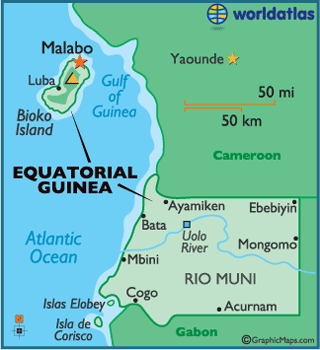
More Information
More Information
Street Soccer in Equatorial Guinea
Street soccer is a popular recreational activity in Equatorial Guinea, where children and teenagers regularly play informal football matches in neighbourhood streets, school playgrounds, community fields, village squares, public parks, and open spaces. These games provide young players with an enjoyable way to stay active, improve their football skills, and develop strong friendships through the sport.
The fast-paced nature of street soccer encourages close ball control, quick passing, creative dribbling, and intelligent movement. Playing in smaller spaces helps participants improve their technical ability, strengthen teamwork, build confidence, and make quick decisions while adapting to different playing conditions.
Street soccer offers an accessible and affordable way for communities across Equatorial Guinea to enjoy football without requiring professional facilities. It promotes healthy lifestyles, strengthens community relationships, and inspires many young players to continue their football journey through schools, local clubs, academies, and organised competitions.
Street Soccer Culture in Equatorial Guinea
Football is one of the most popular sports in Equatorial Guinea, and street soccer is often where many children first develop their passion for the game. Informal matches organised by schools, friends, and neighbourhood communities create a welcoming atmosphere where players of different ages and skill levels can participate while sharing their enthusiasm for football.
Skills Developed Through Street Soccer
Street soccer helps players improve dribbling, first touch, passing accuracy, shooting technique, agility, balance, ball control, tactical awareness, and spatial awareness. Regular games also strengthen communication, creativity, confidence, composure, and the ability to make quick decisions during fast-paced matches.
Street Soccer and Community Development
Street soccer brings communities together through football while encouraging teamwork, positive youth participation, and active lifestyles. It also provides aspiring players with valuable experience before progressing to school teams, local football clubs, academies, or organised youth football programmes.
The E. Guinea in the DMV Metro

- Embassy & Institutional Presence: The community is anchored by the Embassy of Equatorial Guinea located at 2020 16th Street NW, Washington, DC. Led by Ambassador Dr. Crisantos Obama Ondo, the embassy is the primary point for cultural and administrative engagement.
- Student and Professional Groups: Historically, a significant segment of this local diaspora comprises international students and young professionals who arrived for higher education.
- Pan-African Integration: Due to its small size, members of this diaspora frequently interface with broader regional African diaspora coalitions, such as the Afro DMV network and regional Central African cultural events.
Significance
Equatoguinean migration has generally reflected Spanish colonial rule, political repression, economic hardship, education, professional opportunities, regional movement, asylum, and family reunification.
Migration from Equatorial Guinea has historically focused on Spain and neighbouring African countries rather than the United States. Colonial language, religion, education, and administrative connections made Spain an important destination, while Gabon and Cameroon attracted workers, traders, students, and families. Emigration increased after independence as political repression, poverty, and limited opportunities forced many residents abroad. Smaller numbers later moved to the United States through university education, diplomatic service, professional employment, asylum, or family sponsorship. At the same time, the growth of the oil and gas economy attracted foreign managers, technicians, construction workers, and labourers into Equatorial Guinea, making the country both a source and destination of international migration.
Equatoguinean Migration Before Independence
Before independence, the territory was known as Spanish Guinea and consisted of the island and mainland regions that later formed Equatorial Guinea. Migration was influenced by plantation agriculture, maritime commerce, colonial administration, missionary education, military service, and labour demand. Residents travelled to Spain, Cameroon, Gabon, Nigeria, São Tomé and Príncipe, and other nearby territories as sailors, plantation workers, traders, students, domestic employees, and government workers. Equatoguinean settlement in Spain can be traced to at least the 1940s, although direct migration to the United States remained uncommon because most political, educational, and commercial relationships operated through Spain. These colonial connections created the language, family, and institutional networks that later supported larger migration after independence.
Late-Twentieth- and Early-Twenty-First-Century Migration
Equatorial Guinea gained independence from Spain on October 12, 1968, and established diplomatic relations with the United States later that year. The repressive government of Francisco Macías Nguema caused widespread fear, economic collapse, and political exile, leading many citizens to seek safety in Spain, Gabon, Cameroon, Nigeria, and other countries. Migration continued after Macías was removed in 1979, particularly for education, employment, family reunification, and political protection. From the 1990s, oil development attracted substantial foreign investment and overseas workers, while many Equatoguineans still migrated because national wealth did not create equal social and professional opportunities. Communities abroad preserved Spanish, Fang, Bubi, Annobonese, food, music, religious traditions, and close relationships with relatives at home.



Latest Fixtures & Results
| 04.04.2028 |  |
Togo | - |  |
E. Guinea |
| 04.11.2028 | |
E. Guinea | - |  |
Cote I. |
| 04.18.2028 | |
E. Guinea | - |  |
France |
| 04.25.2028 | |
E. Guinea | - |  |
Trinidad T. |
| 05.02.2028 |  |
Brazil | - | |
E. Guinea |
| 05.09.2028 | |
E. Guinea | - |  |
Gambia |
| 05.16.2028 |  |
Burkina F. | - | |
E. Guinea |
| 05.23.2028 | |
E. Guinea | - |  |
Germany |
| 05.30.2028 |  |
Djibouti | - | |
E. Guinea |
