






Significance
Migration within and beyond Africa has generally reflected employment opportunities, regional trade, political conflict, economic inequality, environmental pressures, and the search for safety.
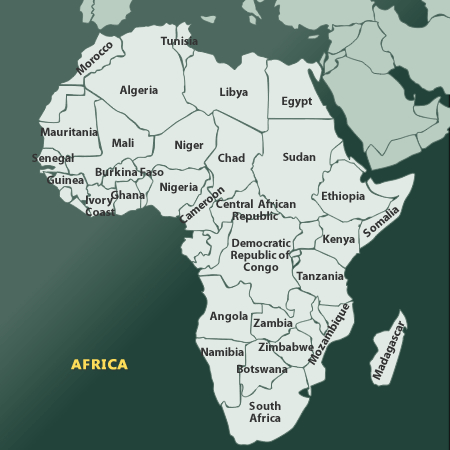
African migration developed through centuries of trade, farming, pastoral movement, family connections, and labour migration across different regions of the continent. During the colonial period, newly created borders divided communities and encouraged workers to travel to mines, plantations, ports, railways, and growing cities. Migration increased after African countries gained independence because of employment, education, civil wars, political instability, drought, and economic hardship. Although some Africans migrated to Europe, North America, and the Middle East, most remained within Africa and settled in neighbouring countries. The African Union now promotes cooperation among member states to improve migration management, protect displaced people, reduce human trafficking, and support safer movement across the continent.
African Migration Before the African Union
Before the African Union was created, movement across Africa was influenced by traditional trade routes, seasonal agriculture, livestock farming, marriage, religious travel, and family relationships. European colonial governments later established national borders that separated ethnic groups and disrupted long-established patterns of movement. At the same time, colonial industries recruited large numbers of African workers for mines, farms, plantations, construction projects, ports, and railway systems. After independence, migration continued as people moved toward cities and economically stronger countries in search of employment and education. Political repression, military coups, civil wars, and regional conflicts also forced many families to seek protection in neighbouring states, creating large refugee and displaced populations throughout Africa.
Twenty-First-Century Migration
The African Union was officially established in 2002 and made migration, regional integration, refugee protection, and economic development important parts of its continental policies. During the twenty-first century, Africans have continued to migrate for employment, education, trade, family reunification, and safety from political violence or environmental disasters. Regional organisations have encouraged easier movement between participating countries, while the African Union has promoted safer, orderly, and legal migration. Most African migrants continue to live in other African countries, although significant communities have also developed in Europe, North America, and the Middle East. Migrants contribute through business, healthcare, agriculture, construction, transportation, education, and technology but may still experience discrimination, exploitation, unemployment, unsafe journeys, and uncertain legal status.