





Significance
Senegalese immigration has generally reflected French colonial rule, labour migration, economic hardship, overseas education, professional opportunities, family reunification, religious networks, and the search for improved living conditions.
Senegalese migration to the United States remained limited until the second half of the twentieth century. Early voluntary arrivals mainly included students, diplomats, academics, merchants, religious leaders, and professionals travelling for education, trade, or specialised employment. Immigration expanded after changes to American immigration law in 1965 and the introduction of the Diversity Visa programme in 1990. Later arrivals included traders, healthcare workers, engineers, technology professionals, entrepreneurs, university students, and relatives joining established families. By 2024, approximately 42,000 Senegal-born immigrants were living in the United States. Senegalese communities preserve Wolof, French, Islamic traditions, food, music, clothing, and close family connections through cultural and religious associations.
Senegalese Migration Before Independence
Before independence, migration was shaped by regional trade, pastoral movement, agriculture, French colonial administration, military recruitment, and labour demand. Senegalese workers, traders, sailors, soldiers, students, and religious scholars travelled mainly within French West Africa and between Senegal and France. Colonial authorities recruited Senegalese soldiers and workers, particularly during the two World Wars, while Dakar became an important administrative, commercial, and transportation centre. Migration to the United States remained uncommon because Senegal’s strongest political, educational, and economic connections were with France and neighbouring African territories. Colonial labour recruitment helped establish migration routes that later supported larger post-independence communities in Europe.
Late-Twentieth- and Early-Twenty-First-Century Immigration
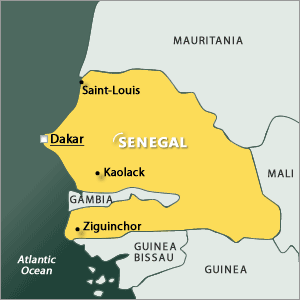
Senegal withdrew from the Mali Federation and declared independence on August 20, 1960; the United States recognised the new republic and established diplomatic relations on September 24. During later decades, most Senegalese emigration was directed toward France and other European and West African countries, although the United States gradually became an important destination. Economic difficulties, unemployment, declining agricultural opportunities, education, and family networks encouraged migration abroad. Senegalese immigrants reached America through family sponsorship, university programmes, professional employment, asylum, and the Diversity Visa programme. Overseas communities established businesses, restaurants, religious circles, cultural organisations, and support networks while contributing remittances, investment, professional knowledge, and assistance to families and communities in Senegal.