





Significance
Immigration from Jamaica has generally reflected British colonial rule, economic opportunity, labour migration, educational advancement, professional employment, family reunification, international business, and regional mobility.
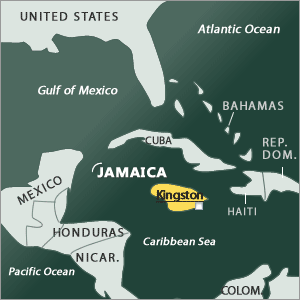
Migration from Jamaica has played a significant role in the history of the United States and the wider Caribbean. Jamaicans have historically migrated to the United Kingdom, Canada, and the United States in search of employment, higher education, and improved economic opportunities. During the twentieth century, labour shortages in North America and Britain, combined with changing immigration policies, encouraged increased migration. Family sponsorship, professional recruitment, and educational opportunities have continued to support migration in recent decades, making Jamaicans one of the largest Caribbean-born immigrant communities in the United States while maintaining strong cultural, economic, and family ties with their homeland.
Jamaican Migration Before Independence
Before independence, Jamaica was administered as a British colony, and migration was shaped by plantation agriculture, maritime trade, colonial administration, missionary education, and regional labour mobility. Following the abolition of slavery in the nineteenth century, many Jamaicans sought employment throughout the Caribbean and Central America, particularly in agriculture, mining, and major infrastructure projects such as the construction of the Panama Canal. Residents also travelled as teachers, civil servants, merchants, students, and skilled workers. Direct migration to the United States increased during the early twentieth century, although educational, political, and commercial links remained closely connected to the United Kingdom. Jamaica gained independence on August 6, 1962, and the United States recognized the new nation shortly thereafter before establishing diplomatic relations.
Late-Twentieth- and Early-Twenty-First-Century Immigration
Migration increased after independence as economic challenges, changing labour markets, and expanding educational opportunities encouraged many Jamaicans to seek careers abroad. Students, physicians, nurses, engineers, teachers, academics, entrepreneurs, information technology specialists, artists, and business professionals increasingly travelled to the United States for university education, specialized employment, research, investment, or family reunification. Professional recruitment, particularly in healthcare and education, has continued to strengthen migration, while family sponsorship has supported the growth of Jamaican communities across the United States. In the United States, Jamaican immigrants often rely on family networks, churches, cultural associations, alumni organizations, and community groups for support with housing, employment, education, and social integration while preserving English, Jamaican Patois, traditional cuisine, music, religious practices, cultural festivals, and close relationships with relatives in Jamaica.