






Ugandan immigration to the United States has generally reflected British colonial rule, political repression, military dictatorship, armed conflict, economic hardship, education, professional employment, asylum, and family reunification.
Ugandan migration to the United States remained limited until the second half of the twentieth century. Early arrivals mainly included students, diplomats, religious workers, academics, businesspeople, and professionals seeking education or specialised employment. Emigration increased during the 1970s and 1980s as political repression, violence under Idi Amin, economic decline, and subsequent civil conflict forced many people to leave Uganda. Later arrivals included healthcare workers, engineers, educators, technology professionals, entrepreneurs, refugees, asylum seekers, and relatives joining established families. Immigration pathways expanded through the Immigration and Nationality Act of 1965, the Refugee Act of 1980, family sponsorship, skilled employment, university programmes, and the Diversity Visa programme.
Ugandan Migration Before Independence
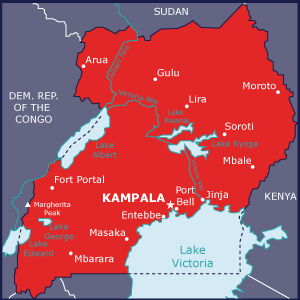
Before independence, Uganda was governed as a British protectorate, and migration was shaped by colonial administration, regional trade, missionary education, military service, agriculture, railway construction, and labour demand. Ugandans travelled mainly to Kenya, Tanzania, Sudan, and other neighbouring territories as traders, soldiers, students, domestic workers, agricultural labourers, and government employees. British colonial development also brought South Asian workers and merchants to Uganda, creating an important commercial community. Direct migration to the United States remained uncommon because most political, educational, and economic connections operated through Britain, India, and East Africa. Uganda achieved independence on October 9, 1962, and the United States recognised the new country and established diplomatic relations on the same day.
Late-Twentieth- and Early-Twenty-First-Century Immigration
Ugandan emigration increased after independence as political instability, military rule, economic disruption, and armed conflict affected the country. In 1972, Idi Amin ordered Uganda’s Asian population to leave within ninety days, forcing tens of thousands to relocate mainly to Britain, Canada, India, and other countries, with some eventually settling in the United States. Amin’s dictatorship and later conflicts displaced additional political opponents, professionals, students, and families. From the 1990s onward, Ugandan immigration to America increasingly involved university students, nurses, doctors, academics, businesspeople, religious workers, skilled employees, asylum seekers, and relatives joining established communities. Ugandan organisations, churches, mosques, businesses, and family networks helped newcomers obtain housing and employment while preserving Luganda, English, Indigenous languages, traditional food, music, religious practices, and connections with Uganda.