








Significance
Togolese migration has generally reflected regional trade, family relationships, education, employment opportunities, political instability, and the search for greater economic security in other West African countries, Europe, and North America.
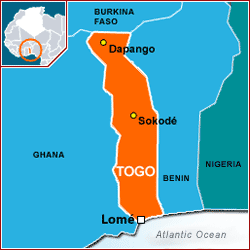
Togolese migration developed from long-established West African traditions of trade, farming, marriage, seasonal work, and family connections between neighbouring communities. These movements existed before modern borders separated the peoples of present-day Togo, Ghana, Benin, and Burkina Faso. Migration increased during the colonial period as roads, railways, plantations, mines, ports, and administrative centres created new employment opportunities. During the twentieth century, many Togolese relocated to Ghana, Benin, Nigeria, and Côte d’Ivoire, while smaller numbers travelled to France, Germany, the United States, and other countries for education, professional employment, family reunification, or political protection. Migrants continued to maintain close relationships with Togo through financial support, family visits, religious organisations, cultural associations, and the preservation of Togolese languages and traditions.
Togolese Migration Before European Colonial Rule
Migration within the region existed centuries before European colonial rule, as different communities moved in search of fertile land, water, security, trade opportunities, and new settlements. The area that became Togo was populated through several historical migration movements involving Ewe, Mina, Kabye, Tem, Gurma, and other communities. Coastal groups developed commercial and cultural relationships with neighbouring regions, while northern communities participated in trade routes connecting the savannah and coastal areas. European merchants, missionaries, and explorers later arrived along the West African coast. Germany declared Togo a protectorate in 1884 and gradually established colonial control over the territory. Following Germany’s defeat in World War I, Togoland was divided between British and French administration, separating some related communities across newly established colonial borders.
Twentieth-Century Migration
Togolese migration increased during the twentieth century as colonial labour systems, transportation networks, urban development, and regional industries created demand for workers. Many Togolese travelled to Ghana, Nigeria, Benin, and Côte d’Ivoire for employment in agriculture, commerce, construction, mining, domestic service, and other occupations. Togo achieved independence from French administration on April 27, 1960, but limited employment, economic difficulties, education, and family connections continued to encourage overseas movement. Political unrest during the early 1990s caused hundreds of thousands of Togolese, particularly residents of Lomé and surrounding areas, to seek temporary safety in neighbouring countries. Togolese communities abroad later established churches, cultural organisations, businesses, and extended-family networks that helped new arrivals find housing and employment while maintaining their languages, religious practices, family responsibilities, and connections with relatives living in Togo.