






Significance
Burundian immigration to the United States has generally reflected colonial rule, ethnic and political violence, civil war, forced displacement, refugee resettlement, education, professional employment, and family reunification.
Burundian migration has historically occurred mainly within Africa’s Great Lakes region rather than through large-scale movement directly to the United States. Early overseas arrivals generally included students, diplomats, religious workers, academics, and professionals seeking education or specialised employment. Migration increased following episodes of political violence after independence, particularly the mass killings of 1972 and the civil war that began in 1993. Large numbers of Burundians fled to Tanzania, Rwanda, Uganda, and the Democratic Republic of the Congo, where many remained in refugee settlements for years. The United States later accepted thousands through humanitarian resettlement programmes, enabling Burundian communities to develop through family networks, churches, cultural organisations, educational institutions, and refugee-support services.
Burundian Migration Before Independence
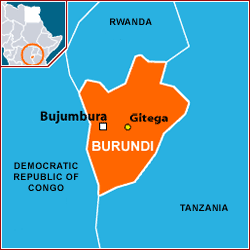
Before independence, migration was influenced by regional trade, agriculture, colonial labour systems, education, and movement across the borders of Central and East Africa. Burundi first became part of German East Africa and was later administered by Belgium with Rwanda as the territory of Ruanda-Urundi. After World War II, Ruanda-Urundi became a United Nations trust territory under Belgian administration. Burundians travelled to neighbouring territories for farming, domestic service, commerce, religious study, government work, and family reasons, but direct migration to the United States remained uncommon because of distance, expense, and limited international connections. Burundi became independent on July 1, 1962, when the UN trusteeship ended, and the United States recognised the new Kingdom of Burundi on the same date.
Late-Twentieth- and Early-Twenty-First-Century Immigration
Burundian immigration increased after recurring political and ethnic violence displaced large sections of the population. Mass killings in 1972 forced many Burundians into neighbouring countries, particularly Tanzania, where some families remained in refugee settlements for more than three decades. The civil war that began in 1993 caused further deaths, economic disruption, internal displacement, and refugee flight. Beginning in the 2000s, the United States accepted thousands of long-term Burundian refugees from Tanzanian camps, including approximately 8,500 people selected for resettlement in 2007. Further political unrest beginning in 2015 produced another wave of displacement. Refugees arriving in America often required help with English, housing, education, healthcare, and employment. Community associations and religious organisations helped families adapt while preserving Kirundi, food, music, dance, religious traditions, and connections with relatives abroad.