





Significance
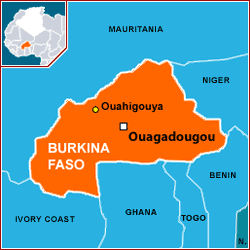
Burkinabè migration has generally reflected French colonial rule, seasonal labour demand, drought, limited farmland and employment, political change, education, professional opportunities, family networks, and regional insecurity.
Migration from Burkina Faso has historically occurred mainly within West Africa rather than through large-scale movement to the United States. For generations, farmers, traders, labourers, students, and families travelled to Côte d’Ivoire, Ghana, Mali, Niger, and other neighbouring countries for plantation work, commerce, education, and seasonal employment. Economic hardship, recurring drought, population growth, and established family networks encouraged continued movement after independence. Smaller numbers later migrated to France, Italy, the United States, Canada, and other international destinations for university study, professional work, business, family reunification, or humanitarian protection. Burkinabè communities abroad maintained connections through remittances, return visits, cultural organisations, development projects, and support for relatives at home.
Burkinabè Migration Before Independence
Before independence, Burkina Faso was known as Upper Volta and formed part of French West Africa. Colonial authorities recruited residents for military service, infrastructure construction, plantations, and other labour throughout the region. Migration was particularly important toward Côte d’Ivoire and the Gold Coast, now Ghana, where workers found employment in cocoa farming, transport, mining, domestic service, and urban commerce. Seasonal movement also helped rural households manage drought, poor harvests, taxes, and shortages of paid employment. Direct migration to the United States remained uncommon because most international connections operated through France and neighbouring African territories. Upper Volta became independent from France on August 5, 1960, and the United States recognised the new country that same day.
Late-Twentieth- and Early-Twenty-First-Century Migration
Migration continued after independence as workers and families relied on established routes to Côte d’Ivoire, Ghana, Mali, Gabon, and other regional destinations. Upper Volta was renamed Burkina Faso in 1984, but economic difficulties, drought, limited formal employment, and educational opportunities continued to influence movement abroad. Students, academics, healthcare workers, engineers, businesspeople, diplomats, and families gradually migrated to France, Italy, the United States, Canada, and other countries. Some reached the United States through university programmes, professional employment, family sponsorship, refugee protection, or the Diversity Visa programme. From the late 2010s, armed violence and insecurity caused extensive internal displacement and forced some Burkinabè to seek safety in neighbouring countries. Diaspora organisations have helped migrants preserve languages, music, food, religious traditions, and family relationships while supporting community and development initiatives in Burkina Faso.