 Sign In






 Facebook
 X-Twitter
 Instagram
 Linkedin
 Youtube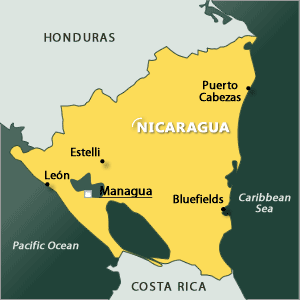
More Information
More Information
Street Soccer in Nicaragua
Street soccer is a popular community activity in Nicaragua, where children and teenagers regularly gather in neighbourhood streets, school grounds, parks, village fields, and open community spaces to play informal football matches. These games provide a fun and accessible way for young players to stay active, develop their football skills, and enjoy time with friends.
The energetic style of street soccer encourages quick passing, close ball control, creative dribbling, and fast movement. Playing on smaller and often improvised pitches helps participants improve adaptability, confidence, teamwork, and decision-making while learning to handle different playing conditions.
Street soccer remains one of the easiest ways for communities across Nicaragua to enjoy football without requiring professional facilities. It promotes healthy lifestyles, strengthens local friendships, and inspires many young people to continue their football journey.
Street Soccer Culture in Nicaragua
Football is widely enjoyed throughout Nicaragua, and street soccer is often where many children first develop their passion for the game. Informal matches organised by schools, neighbours, and local communities create a lively atmosphere where players of different ages and abilities can participate.
Skills Developed Through Street Soccer
Street soccer helps players improve dribbling, first touch, passing accuracy, agility, balance, ball control, and awareness. Regular games also strengthen communication, creativity, confidence, and the ability to make quick decisions during fast-paced situations.
Street Soccer and Community Development
Street soccer brings communities together through football while encouraging teamwork, positive youth participation, and active recreation. It also provides aspiring players with valuable experience before progressing to school teams, local football clubs, academies, or organised youth football programmes.
The NICARAGUA in the DMV Metro

The Nicaraguan diaspora in the DMV (District of Columbia, Maryland, and Virginia) is a resilient, close-knit, and increasingly visible Central American community. Unlike the larger historic Nicaraguan-American population centers in South Florida and California, the DMV community has developed a strong East Coast presence, combining long-established families, recent political exiles, human-rights advocates, students, and newly arrived migrants. The population is spread across suburban communities, particularly in Montgomery County, Maryland, and Prince William County, Virginia, rather than concentrated in a single neighborhood.
Cultural Hubs & Community Networks
-
Asociación Cívica Nicaragüense: The Asociación Cívica Nicaragüense (ACN) serves as an important nonprofit network for Nicaraguans in the broader region. It supports displaced families and political exiles navigating life in the United States while also promoting cultural preservation, community assistance, and youth activities.
-
Embassy Hub: The Embassy of Nicaragua in Washington, D.C. provides consular and diplomatic services for Nicaraguan citizens in the region and serves as an institutional connection to Nicaragua. Its presence also provides a visible representation of Nicaraguan national culture in the capital.
-
Faith & Newcomer Networks: Churches and parish-based organizations across Washington, Northern Virginia, and Maryland have played an important role in welcoming newly arrived Nicaraguans. These networks can provide language assistance, employment connections, food programs, mentorship, and practical support for families adjusting to life in the DMV.
Key Cultural Gatherings
-
La Purísima & La Gritería: Celebrated primarily in early December, these traditions are among the most important cultural and religious events for Nicaraguans. Families gather around decorated altars, sing traditional songs, and distribute sweets, snacks, and small gifts to children, creating an important intergenerational connection to Nicaraguan culture.
-
Central American Festivals: Because the Nicaraguan community is smaller than the DMV's Salvadoran, Guatemalan, and Honduran populations, Nicaraguans frequently participate in broader Central American festivals and parades. Events such as Fiesta DC provide opportunities to showcase Nicaragua's blue-and-white flag, music, food, and cultural traditions alongside neighboring Central American communities.
-
Community Gatherings: Family celebrations, parish events, cultural programs, and nonprofit activities provide additional opportunities for Nicaraguans to maintain connections with one another and preserve traditions among younger generations.
Culinary & Social Anchors
Nicaraguan food provides one of the community's most important social anchors. The DMV's fritanga tradition—informal eateries serving homestyle Nicaraguan food—creates natural gathering places for families and expatriates.
-
Nicaraguan Fritangas: Restaurants such as El Chante Comedor y Fritanga Nica, Gio's Sazón Nicaragüense, Eda's Latin Food, and La Casita Pupuseria & Cocina C.A. contribute to the region's Nicaraguan and Central American culinary scene.
-
Traditional Food: Community members seek out familiar dishes and flavors associated with Nicaragua, turning restaurants and food businesses into informal spaces for socializing, family gatherings, and cultural exchange.
-
Central American Markets: Nicaraguans also rely on the DMV's broader Central American grocery network for ingredients, prepared foods, specialty products, and household items that are difficult to find outside Latin American commercial districts.
Newcomer & Digital Networks
The community's geographic dispersion makes churches, nonprofit organizations, social media, messaging groups, and personal networks particularly important.
-
Newcomer Support: Humanitarian organizations and faith-based groups help newly arrived Nicaraguans navigate employment, housing, language learning, immigration-related resources, and integration into the local community.
-
Family Networks: Established Nicaraguan families frequently serve as informal support systems for newcomers, helping them find housing, employment, transportation, schools, and community services.
Overall, the Nicaraguan community in the DMV is defined by resilience, family networks, political migration, Central American cultural connections, and a strong culinary identity. Rather than forming a single ethnic enclave, Nicaraguans maintain their identity through organizations such as ACN, churches and community groups, fritangas and Latin American businesses, cultural celebrations such as La Purísima, and close connections with the wider Central American community.
Significance
Immigration from Nicaragua has generally reflected political instability, armed conflict, economic opportunity, educational advancement, professional employment, asylum, family reunification, and humanitarian migration.
Migration from Nicaragua has historically been shaped by political change, economic conditions, and close regional ties within Central America. Nicaraguans have commonly migrated to neighboring Costa Rica, Honduras, and other Latin American countries for employment, trade, education, and family connections. Migration to the United States increased significantly during the late twentieth century as political unrest, civil conflict, natural disasters, and economic challenges encouraged many individuals and families to seek safety and better opportunities. Today, Nicaraguan immigrants have established vibrant communities across the United States while maintaining strong cultural, linguistic, and family ties with their homeland.
Nicaraguan Migration Before Independence
Before independence, Nicaragua formed part of the Spanish Empire as a province within the Captaincy General of Guatemala. Migration during the colonial period was influenced by agriculture, cattle ranching, mining, regional trade, missionary activity, and government administration. Residents travelled throughout Central America as farmers, merchants, craftsmen, students, civil servants, and members of extended families. Direct migration to the United States remained relatively limited because political, educational, and commercial connections were centred primarily on Spain and neighboring Spanish territories. Nicaragua declared independence from Spain on September 15, 1821, as part of Central America, and became a fully sovereign republic after the dissolution of the Federal Republic of Central America in 1838. The United States subsequently established diplomatic relations with the country.
Late-Twentieth- and Early-Twenty-First-Century Immigration
Migration increased significantly following the Nicaraguan Revolution of 1979, the subsequent civil conflict during the 1980s, and recurring economic and political challenges. Later events, including Hurricane Mitch in 1998 and periods of political unrest, also contributed to migration through humanitarian, asylum, and family-based pathways. Students, physicians, engineers, scientists, academics, entrepreneurs, information technology specialists, business professionals, and skilled workers increasingly travelled to the United States for university education, specialized employment, investment, or family reunification. In the United States, Nicaraguan immigrants often rely on family networks, churches, cultural associations, community organizations, and professional groups for support with housing, employment, education, language services, and community integration while preserving Spanish, traditional cuisine, music, cultural heritage, religious practices, and close relationships with relatives in Nicaragua.
Latest Fixtures & Results
| 04.04.2028 |  |
Dominica | - |  |
Nicaragua |
| 04.11.2028 | |
Nicaragua | - |  |
Tunisia |
| 04.18.2028 |  |
Macedonia | - | |
Nicaragua |
| 04.25.2028 |  |
Grenada | - | |
Nicaragua |
| 05.02.2028 | |
Nicaragua | - |  |
D. Republic |
| 05.09.2028 |  |
United N. | - | |
Nicaragua |
| 05.16.2028 | |
Nicaragua | - |  |
San Marino |
| 05.23.2028 |  |
Zimbabwe | - | |
Nicaragua |
| 05.30.2028 | |
Nicaragua | - |  |
North Korea |
