Sign In












 Facebook
 X-Twitter
 Instagram
 Linkedin
 Youtube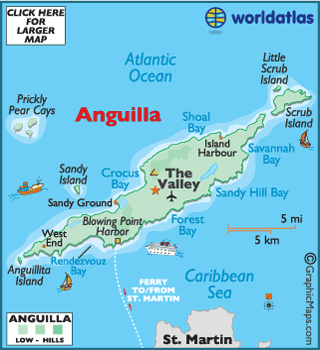

Significance
Anguillan migration has generally reflected limited natural resources, employment opportunities abroad, family connections, political change, hurricanes, and the island’s close relationships with Britain, the Caribbean, and North America.
Anguillan migration developed through long-established movement between nearby Caribbean islands for fishing, trade, marriage, seasonal work, and family responsibilities. Economic hardship, drought, limited farmland, and restricted employment later encouraged many residents to seek opportunities in Saint Martin, the United States Virgin Islands, Puerto Rico, Britain, Canada, and the continental United States. Migration became especially important during the twentieth century as Anguillans found work in construction, tourism, shipping, domestic service, healthcare, and other industries. Overseas communities maintained close connections with the island through family support, remittances, return visits, property ownership, and cultural organisations. Anguilla later attracted foreign workers as tourism, hospitality, construction, and financial services expanded.
Anguillan Migration Before Separate Territorial Status
Before Anguilla became a separate British territory, migration was shaped by the island’s small population, dry climate, limited agricultural land, and dependence on fishing, livestock farming, salt production, boatbuilding, and regional trade. Anguillans regularly travelled to neighbouring islands for work and commerce, while periods of drought and economic stagnation encouraged some families to settle elsewhere. Britain joined Anguilla administratively with Saint Kitts and Nevis during the nineteenth century, despite opposition from many island residents. Limited investment and political representation contributed to dissatisfaction and outward migration. Anguilla later entered the West Indies Federation and then the associated state of Saint Kitts-Nevis-Anguilla. Resistance to that arrangement produced the Anguilla Revolution of 1967, after which negotiations eventually led to Anguilla becoming a separate British dependent territory in 1980.
Late-Twentieth-Century Migration
Anguillan migration continued during the late twentieth century as residents travelled abroad for higher education, professional training, employment, healthcare, and family reunification. The United Kingdom, the United States, the U.S. Virgin Islands, Canada, and other Caribbean territories became important destinations. At the same time, the development of luxury tourism, hotels, restaurants, construction projects, transportation, and financial services created new employment within Anguilla and attracted workers from nearby Caribbean countries and other regions. Return migration also became important as some Anguillans came home with savings, skills, and overseas experience. Migrants and their descendants continued to support relatives and maintain the island’s language, churches, festivals, food, music, and family traditions. Anguilla remains a British Overseas Territory, and qualifying residents may hold British Overseas Territories citizenship and British citizenship.